 Grand Circle South America Voyage 2019
Travel blog Jan & Mieke
Blog 10 Chili - Chile

Dr. Clive Leatherdale, een van onze gastsprekers, heeft de geschiedenis van de door ons bezochte landen in Zuid-Amerika samengevat in een aantal historische stappen:
- Bewoning door de oorspronkelijke bewoners, sommige zelfs 10.000 jaar geleden.
- Kolonisatie in de 16e eeuw door de Spanjaarden (in Brazilië door de Portugezen).
- De genocide van de oorspronkelijke bewoners.
- Het gebruiken van de overgebleven bewoners om de tin-, koper- en goudmijnen te exploiteren. Vaak ontstonden er gemengde huwelijken met de oorspronkelijke bewoners.
- Onafhankelijkheid van Spanje of Portugal (19e eeuw).
- Begin van oorlog met de buurlanden.
- Immigratie vanuit Europa, i.v.m. de behoefte aan werkkrachten in de mijnen.
- Halverwege de 20e eeuw: economische crisis en de Tweede Wereldoorlog (veel landen waren in oorlog met Duitsland).
- Na de oorlog nam de invloed van de V.S. toe en ontstonden er, met steun van de V.S., militaire dictaturen, om zogenaamde "Cuba-toestanden" te vermijden.
Chili is een duidelijk voorbeeld van een land dat deze stappen
heeft doorlopen.
Voor mij persoonlijk begon de geschiedenis van Chili in de jaren
zeventig van de 20ste eeuw, toen President Allende de
Noord-Amerikanen het land uit schopte en hun bezittingen (o.a. de
mijnen) nationaliseerde. Wij, de jonge generatie van de zeventiger
jaren, meenden dat deze bezittingen de Chilenen toebehoorden en niet
de buitenlanders.
Ik zal nooit 11 september 1973 vergeten. Ik hoorde op de radio dat het Chileense presidentieel paleis was gebombardeerd (met steun van de V.S.) en dat president Allende, na het lezen van een brief aan het volk, zelfmoord pleegde. Ik moest huilen en vond het zo erg voor de Chilenen.
We hebben tijdens deze cruise heel veel nieuwe informatie gehoord
over Chili, ondermeer over de steun van de militaire dictator
Pinochet aan Thatcher tegen Argentinië.
Tegenwoordige heeft Chili diplomatieke relaties met de meeste
landen, waaronder Argentinië en Peru.
Er is nu een democratisch gekozen president. Het land is één van de
meest economisch en sociaal stabiele landen in Zuid-Amerika.
We vonden het een fijn land met leuke mensen en het was prettig
om allerlei dingen te ontdekken.
Omdat het nog steeds zomervakantie in Zuid-Amerika is, zagen we veel
toeristen. De meeste kwamen uit Chili of andere Zuid-Amerikaanse
landen. We zagen geen Noord-Amerikanen (V.S.) of Europeanen en we
waren het enige cruiseschip in de havens.
We voelden ons een beetje speciaal en toch waren er heel veel dingen
hetzelfde als in Europa. Zelfs de "Weer naar school"-reclames leken
op de onze in juli-augustus.
We waren van 7 - 19 februari in Chili en we bezochten verschillende plaatsen:
- Punta Arenas in de Straat van Magellaan
- De zuidelijke doorgangen zoals het Beagle Channel en de English Narrows
- Puerto Montt
- Valparaiso, niet ver van Santiago
- Arica in het uiterste noorden
Over Punta Arenas en de zuidelijke passages heb ik al in blog9
geschreven.
Chili heeft een lengte van 4.300 km van het noorden naar het zuiden
en en een breedte van 350 km van oost naar west. Het land heeft een
grote variatie in landschappen en klimaten.
Puerto Montt, 13 februari
Puerto Montt is de hoofdstad van het Chileense Lake District. De
streek is bevolkt door de afstammelingen van Duitse emigranten, die
zich in het gebied vestigden in de tweede helft van de 19e eeuw.
Het is een spectaculair gebied met pittoreske meren en actieve
vulkanen.
We hadden prachtig weer met veel zon en het was niet te heet. We
bewonderden de met sneeuw bedekte Osorno vulkaan en de mooie Petrohue
watervallen.
Daarna gingen we naar Puerto Varas om de stad te bezichtigen. Helaas
voelde ik me niet lekker en ik ben terug naar de bus gegaan, om een
dutje te doen. Ik had een griepje te pakken gekregen, zoals zo velen
op het schip. Sommige dagen voelde ik me heel beroerd en andere
dagen ging het weer wel. Uiteindelijk duurde het meer dan een week.
Valparaiso, 15 - 16 februari
Valparaiso is een belangrijke stad met ongeveer 300.000 inwoners
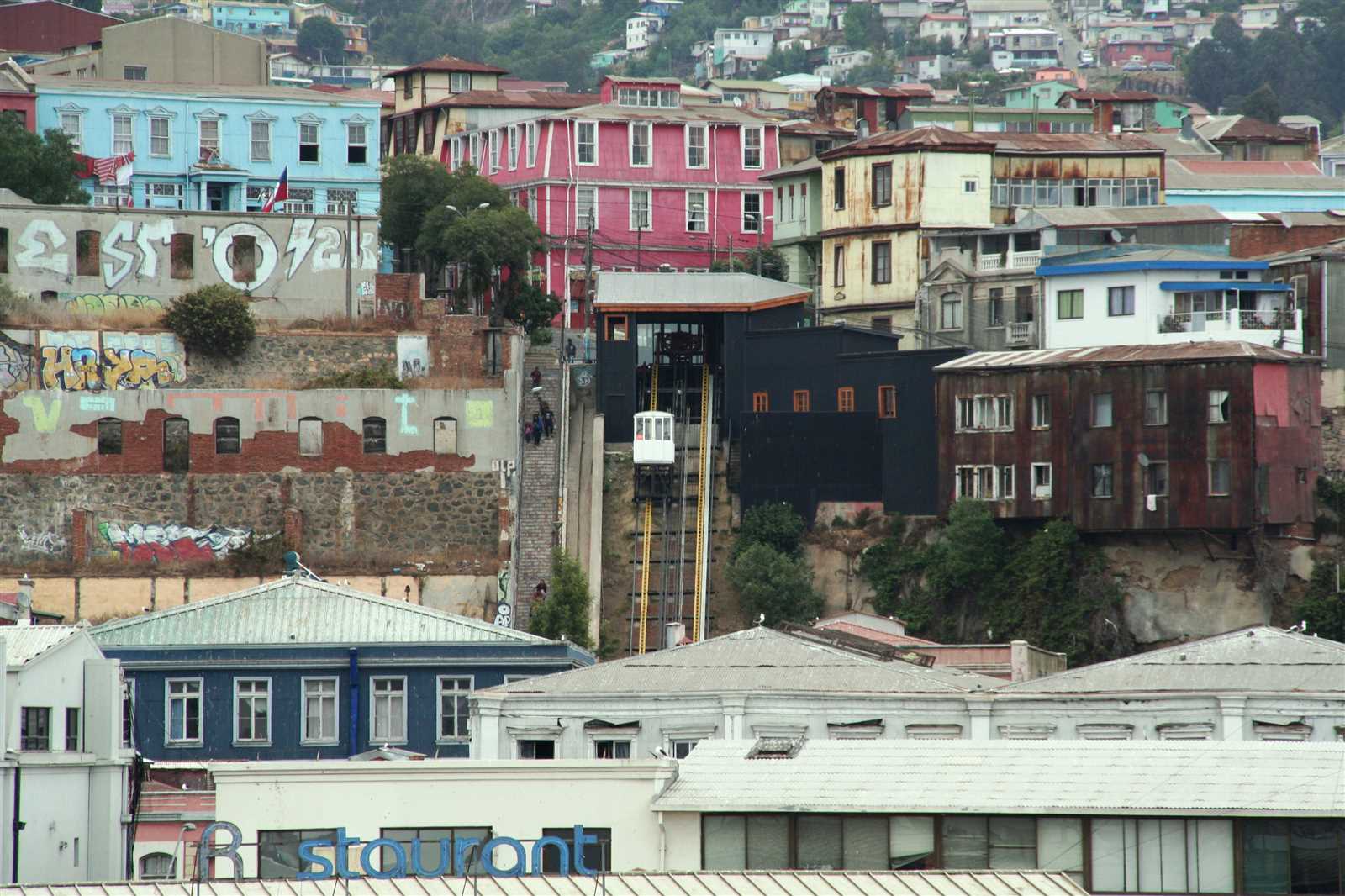
en het heeft een drukke zeehaven. De stad is gebouwd op een heuvel
en er zijn meer dan 25 liften, die worden gebruikt om naar hogere
gedeelten te gaan. De liften zijn niet gratis.
De Marco Polo lag in de haven tussen verschillende
containerterminals. Het was leuk om de activiteiten te bekijken en
vanuit ons schip zagen we het laden en lossen. Aan de andere kant
van het schip was een toeristische haven en we zagen heel veel
toeristen, die de haven bezochten en rondvaartochtjes deden.
We mochten niet tussen de containers in het havengebied lopen en we
moesten een shutlle-bus nemen naar de terminal, aan de rand van de
haven.
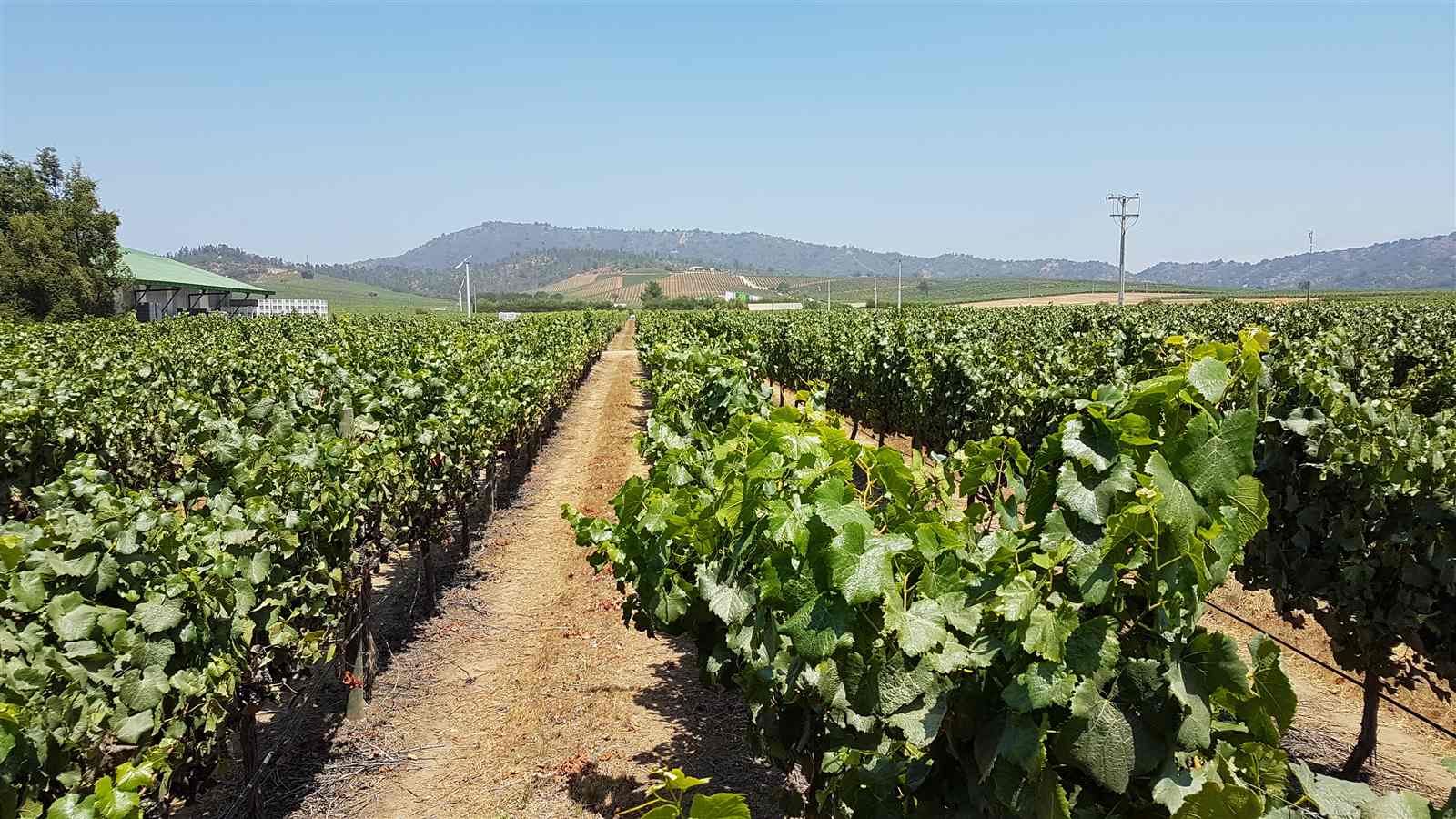
Op 15 februari bezochten we "Casa del Bosque", een wijngaard in
de Casablanca vallei. De gids van de wijngaard liet ons zien hoe de
wijn werd gemaakt en na de uitleg mochten we enkele wijntjes
proeven. De wijngaard is tamelijk klein en jong, maar de wijn was
veelbelovend.
Aan het eind van de excursie gingen we naar het plaatsje Viña del
Mar en bewonderden een standbeeld van Paaseiland, dat daar voor
een lokaal museum stond. Er zijn slechts twee beelden van Paaseiland buiten het eiland te bewonderen: één in Londen en dit
exemplaar.
De volgende dag bezochten we Valparaiso en gingen naar de markt.
Maar omdat ik me nog steeds ziek voelde, ging ik terug naar het
schip en ging Jan winkelen en kocht een Chileens wijntje voor ons.
Arica, 19 februari
Arica is een stad met ongeveer 162.000 inwoners en het is Chili's
noordelijkste stad. Het staat bekend als de "stad van de eeuwige
lente" en het heeft de laagste hoeveelheid jaarlijkse regenneerslag van de wereld. Totdat wij er heen gingen.
We hadden een excursie gepland naar de Azapa-vallei met zijn bekende
geoglyfen, tekeningen op de berghellingen, die lang geleden zijn
gemaakt door de indianen.
Helaas ontving het excursiebureau 4 dagen voor onze excursie een
mail, dat dit gedeelte van de excursie niet door kon gaan. Het had
geregend en er was geen weg meer. Ze boden aan om ons bezoek aan het
Archeologisch Museum uit te breiden. We accepteerden het aanbod.
Het eerste gedeelte van de excursie bestond uit een bezoek aan
het centrum van Arica met een mooi plein, de San Marco kerk en El Morro.
El Morro is een 110 meter hoge rots. Op deze rots wonnen de Chilenen
een oorlog tegen Peru.
De San Marco kerk is een stalen kerk, in 1876 ontworpen door Gustave
Eiffel, dezelfde ontwerper als van de Eiffeltoren in Parijs.
Het volgende onderdeel was een tochtje naar de Atacama-woestijn, waar
de beroemde Chileense beeldhouwer Diaz Fleming beelden heeft gemaakt
en neergezet. De beelden zijn een eerbetoon aan het volk van de
Andes. Na dit gedeelte voerden bewoners van de Andes een dansje uit
en werden begeleid door een band. We dronken een lokaal drankje, de
pisco sour. Het was zuur maar wel lekker.
Na de verfrissingen reed de bus ons naar het San Miguel de Azapa
Archeologisch Museum. Dit gedeelte was uitgebreid met een bezoek aan
een extra kamer, gewijd aan het leven van de Chinchorro's, met de
oudste mummies van de wereld. Deze mummies zijn nog van vóór het Incatijdperk en gedateerd op 5000 voor Christus.
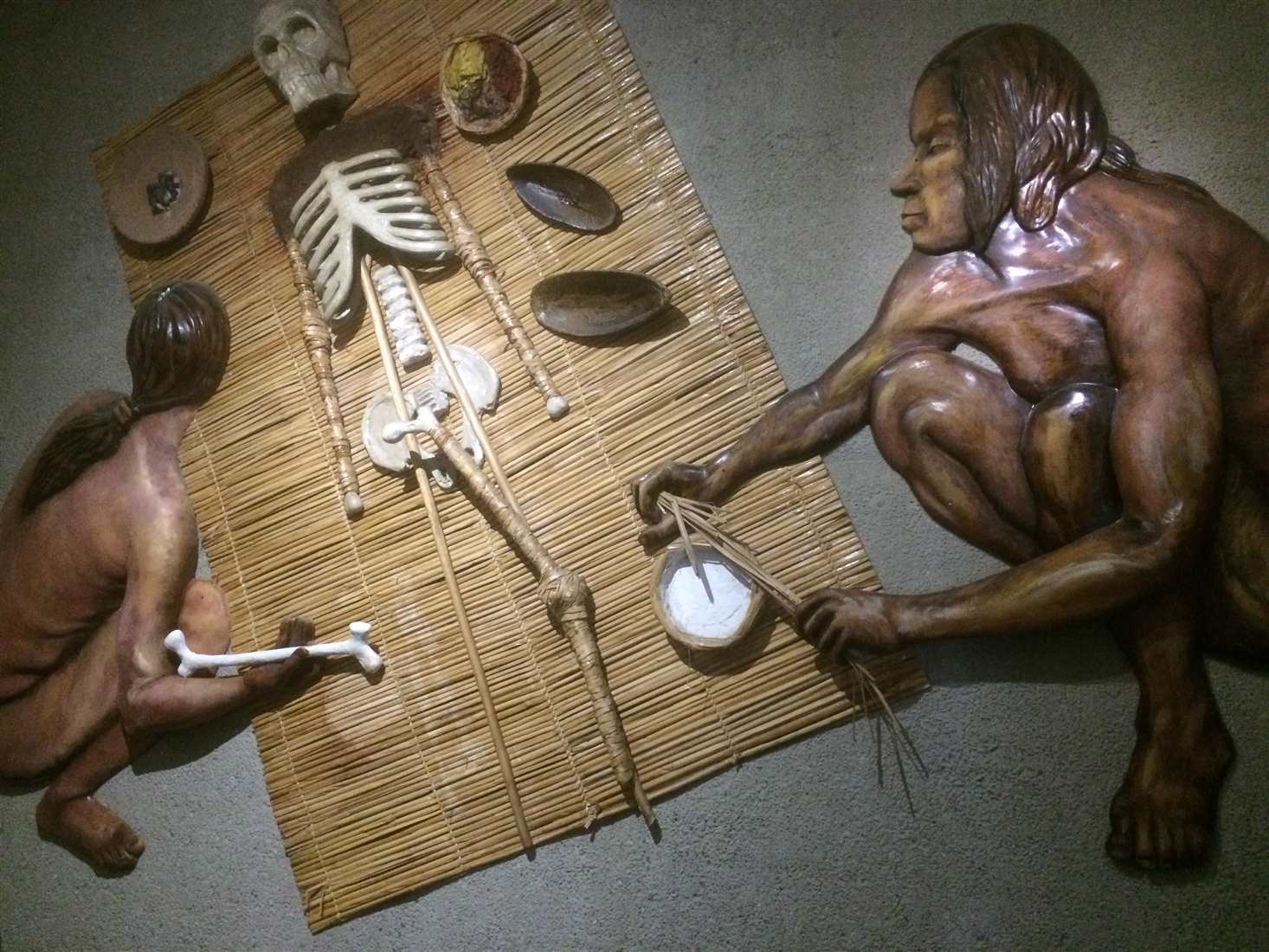
Het was heel indrukwekkend. Het museum heeft heel veel mummies. De
Chinchorro's gebruikten een speciale mummificatechniek. Ze haalden
de huid van het lichaam, maakt het lichaam schoon, vulden het op en
plaatsen de huid weer terug.
's Middags bezochten we Arica voor de tweede keer, om te gaan winkelen. Maar ik besloot terug naar het schip te gaan. Het was erg warm en ik voelde me nog steeds niet goed.
Ondanks dat ik in Chili ziek ben geweest, hebben we erg genoten van het land en van onze verschillende uitstapjes.

Dr. Clive Leatherdale, one of our lecturers, summarized the history of the by us visited countries of South-America by giving the next steps of their history:
- Inhabitation of the land by native people, some even 10,000 years ago.
- Colonization by the Spanish in the 16th century (in Brazil by the Portuguese).
- Genocide of the natives.
- Using the remaining natives to exploit the tin, copper and gold mines. The colonists often mixed with the natives.
- Independency from Spain or Portugal (19th century).
- Starting war with the neighbouring countries.
- Immigration from Europe because of the need of labourers in the mines.
- Mid 20th century: economical crises and World War II (war with Germany).
- After the war, influence of the USA and establishing military dictatorships to avoid "Cuba like" situations.
Chile is an example of a country with these characteristics.
For me the history of Chile started in the seventies of the 20th
century, when President Allende kicked the U.S. companies out of his
country and nationalized mines and other companies. We, young people of
the seventies, were of the opinion that those properties belonged to
the Chilean people.
I will never forget 11 September 1973. I heard on the radio that the Chilean presidential palace was bombed by the army (with support of the USA) and that president Allende, after reading a letter to the people, committed suicide. I cried and felt so sorry for the Chilean people.
We have heard a lot of new information on this cruise, such as
about the support of the military dictator Pinochet to Thatcher
against Argentina.
In the present time, the Chilean government has diplomatic relations
with most countries, including Argentina and Peru.
The country has a democratically chosen president. It is economically
and socially one of the most stable and prosperous nations of South
America.
We loved Chile, liked the people and it was a pleasure to
discover all kind of things.
Because it still is 'summer holiday' in South America, we saw a lot
of other tourists. Most of them were from Chile or other South
American countries. We did not see North Americans (USA) or
Europeans. We were the only cruise ship in the ports.
It felt special and nevertheless a lot of things are the same as in
Europe, even the 'back to school' advertisements for school
necessaries, which we have in our summer holidays in July and
August.
We were in Chile from 7th - 19th February and we visited different places:
- Punta Arenas, in the Strait of Magellan.
- The southern Passages such as the Beagle Channel and the English Narrows
- Puerto Montt
- Valparaiso, not far from Santiago
- Arica in the north
I have already written about Punta Arenas and the southern
passages in blog9.
Chile stretches over 4,300 km (2,670 miles) from north to south, but
only 350 km (217 miles ) from east to west. The country has a large
variety of climates and landscapes.
Puerto Montt, 13 February
Puerto Montt is the
capital of the Chilean Lake District. The region is populated by
descendents of German emigrants, who established their selves in the region in the
second half of the nineteenth century.
It is a spectacular area with picturesque lakes and active
volcanoes.
We had wonderful weather, much sun and it was not too hot. We admired
the snow capped Osorno Volcano and the beautiful Petrohue Falls.
Then we went to Puerto Varas to visit the town. However, I did not
feel well and I went back to our coach, to sit and to do a little nap.
I had a touch of the flu, like many others on the ship. Some days I
felt terrible and now and then I felt a little bit better.
Eventually, it lasted more than a week.
Valparaiso, 15 -16 February
Valparaiso is a major city with approximately 300,000 inhabitants
and it has a busy seaport. The city is built on a hill and there are
more then 25 elevators, which are used to go to the higher parts.
They are not for free.
The Marco Polo was berthed in the port between different container
terminals. It was nice to watch the activities in the port and from our ship we
saw the unloading and transport. At the other side of the ship was a
touristic part and we saw a lot of tourists,
who visited the port and did trips on little boats.
We were not allowed to walk between the containers,
we had to take a shuttle bus to the terminal, outside the port.
On the 15th February we visited Casas del Bosque, a winery in the
Casablanca Valley. The guide of the winery showed us how they
processed the wine and afterwards we tasted some wines. It is a
rather small and young winery, but the wine was promising.
At the end of the excursion we admired a statue of Easter Island in
front of the museum in Viña del Mar. There are only two Easter Island
statues in the world, outside the Island: one in London and this
one.
The
next day we visited Valparaiso and went to the market. But
because I was still ill, I went back to the ship and Jan went
shopping and bought us some Chilean wine.
Arica, 19 February
Arica is a city with approximately 162,000 inhabitants and is
Chile's northern-most city. It is known as the "City of the eternal
spring" and it has the lowest annual rainfall anywhere in the world.
Until we intended to visit it.
We had planned to do an excursion to
the Azapa Valley with its famous geoglyphs, drawings on the mountains, made a long time ago by the Indians.
Unfortunately the excursion office received 4 days before our
excursion a message, that this part of the excursion did not go on.
It had rained and there was no road anymore. They offered a more
extensive visit to the Archeological Museum instead. We accepted
that.
The first part of the excursion was a visit to the city centre
with its main square, the San Marcos Church and El Morro.
El Morro is a 110 meters high (361ft) cliff. On this cliff the
Chileans won a war against the Peruvians.
The San Marcos Church is an iron church, designed in 1876 by Gustave
Eiffel, the same of the tower in Paris.
The next part was to view statues in the Atacama desert, made by Diaz
Fleming, a famous Chilean sculptor. He created the Tutelar Figures
as a homage to the Andean people. After our visit we were
entertained by Andean folk music and we drank a local drink, the
pisco sour.
After our refreshments our coach drove to the San Miguel de Azapa Archeological Museum. This part of the excursion was extended with a visit to a second room, dedicated to the life of Chinchorro people, with the oldest mummies in the world. These mummies are pre-Inca and dated from 5,000 B.C.
It was impressive, the museum has so many of these mummies. The natives used a special mummification technique (they emptied the body, filled it with other material and place the removed skin back).
In the afternoon we visited Arica centre for the second time, with the intention to shop, but I decided to go back to the ship. It was hot and I still did not feel very well.
Despite my illness, we enjoyed our visit to Chile very much.
Foto's - Pictures

Puerto Montt: Duitstalige invloed - German territory

Omgeving Puerto Montt - Near Puerto Montt

Osorno vulkaan - Osorno Volcano

Petrohue watervallen - Petrohue Falls

Puerto Varas
Casas del Bosque: wijngaard- vineyard

Casas del Bosque: bottling the wine

Viña del Mar: beeld van Paaseiland - Easter Island statue

Valparaiso: markt - market

Valparaiso: markt en standbeeld - market and statue

Valparaiso: haven met rondvaartbootjes - port with daytrip boats
Valparaiso: liftje - elevator

Valparaiso: container haven - container port

Arica: San Marcoskerk - San Marcos church

Arica: San Marcoskerk - San Marcos church

Atacama: standbeelden in de woestijn - statues in desert

Atacama: standbeelden in de woestijn - statues in desert

Atacama: dansers uit de Andes- dancers from the Andes

Atacama: band uit de Andes - Andean band

Atacama: woestijn - desert

Atacama: dorp in een droge rivierbedding - village in a dry riverbed

San Miguel de Azapa Archeological Museum: mummy
San Miguel de Azapa Archeological Museum: mummificeren - mummification process

Arica: El Morro