 Grand Circle South America Voyage 2019
Travel blog Jan & Mieke
Blog 14 Vragen en antwoorden - Questions and answers

Na onze thuiskomst werden ons veel vragen gesteld, zoals:
- Verveel je je niet, zo lang op zee?
- Word je niet veel zwaarder, van al dat eten (en drinken) aan boord?
- Wordt er niet veel gedronken?
- Wat voor schip is de Marco Polo?
In het onderstaande probeer ik deze vragen te beantwoorden.
De Marco Polo
We hebben bij het Britse Cruise & Maritime Voyages al meerdere cruises gedaan: naar Spitsbergen
(2010), de Amazone (2014), Canada (2015), Cuba en Mexico (2016) en
de Canarische eilanden (2018). Al deze cruises waren met de Marco
Polo, behalve die naar de Canarische eilanden. De laatste deden we
met de Magellan.
De Marco Polo bevalt ons het beste, ondanks de dramatische
gebeurtenissen tijdens de cruise naar de Amazone van 2014, waarbij
we in een orkaan terecht kwamen.
Het schip is redelijk klein: het bevat 425 hutten en kan maximaal
800 passagiers huisvesten. Er waren 345 bemanningleden op onze reis
en de bemanning telde 21 nationaliteiten.
Het schip is in 1965 in Oost-Duitsland gebouwd als
passagiersschip en heette de Aleksandr Pushkin. Het was tot 1991
eigendom van een Russische rederij.
Het moest door stukijs kunnen varen en had een daarop afgestemde
sterke romp en het moest, indien nodig, ook ingezet kunnen worden
voor troepentransporten. Het heeft onderdeks in de wand grote deuren
naar de laadruimten, zodat er vanaf de wal kleine tanks in konden
rijden. De gangen waren redelijk breed, omdat de soldatenbemanning
er met volle bepakking doorheen moest kunnen lopen. Het is in 1991
overgenomen door een Noorse reder en sindsdien geregistreerd in de
Bahamas.
Het schip is in 1993 geheel herbouwd en sindsdien heet het Marco
Polo. Vanaf 2010 wordt ze geëxploiteerd door CMV.
De Marco Polo biedt "child free"cruises aan, dat betekent dat er
zich alleen passagiers vanaf 16 jaar aan boord bevinden en er geen voorzieningen
zijn voor kinderen.
Er zijn zowel binnen- als buitenhutten. De buitenhutten, 70% van het
totaal, hebben patrijspoorten en liggen meteen aan het water of
bevinden zich aan de open dekken en hebben dan wat grotere ramen. Er
zijn geen privébalkons. Je kunt vrij over de dekken wandelen en
rondjes over het schip lopen, in tegenstelling tot de grote
cruiseschepen met duizenden passagiers, die vaak hun eigen balkon
hebben. Dat zijn drijvende hotels met veelal voor en/of achter
enkele open dekken afgesloten met hoge glazen wanden. Je kunt er
niet lekker over de reling hangen.
Het schip heeft allerlei faciliteiten zoals twee restaurants en
vijf loungegebieden, variërend van een theaterlounge tot een bar met
dansvloer.
Er is een kleine bibliotheek met vooral Engelstalige boeken en er
staan gemakkelijke fauteuils, zodat je kunt lezen met uitzicht op
zee.
Voor het kooplustige publiek is er een winkeltje, dat naast
allerhande dagelijkse benodigdheden zoals o.a. tandpasta en
deodorant ook kleding, tassen en boeken verkoopt en er is een
belastingvrije winkel met parfumerie, tabak en drank. De gekochte
drank wordt opgeborgen en krijg je pas uitgereikt als je naar huis
gaat.
Er is een kapper aan boord, een schoonheidsspecialist en een
massagesalon en er is
een sauna en een zwembad en er zijn bubbelbaden (jacuzzi). Het schip
heeft een speciale fitnessruimte met fitnessapparaten.
Het schip heeft ook een medisch centrum met een arts en
verpleegster.
Voor de eigen veiligheid is er elke twee weken een sloepenrol, om de passagiers te laten oefenen wat ze moeten doen in noodsituaties en waar ze heen moeten.
Eten en drinken
Al de maaltijden en koffie en thee zijn inclusief, de drankjes
moet je wel betalen.
De drank is niet echt goedkoop, maar als je zo’n lange reis
maakt, ga je niet iedere avond feesten, dat doe je thuis ook niet.
Dit geldt ook voor de maaltijden. Sommige passagiers komen kilo’s
aan, omdat ze het lekkers niet kunnen weerstaan. Wij hebben als norm
om niet veel meer dan thuis te eten dan blijft je gewicht
ongeveer hetzelfde.
Zoals eerder gezegd, heeft de Marco Polo twee restaurants. In het
Waldorf-restaurant kun je op vaste tijden eten en is er een
keuzemenu van vijf gangen. Het zelfbedieningsrestaurant Marco’s Bistro
is wat informeler en heeft bijna hetzelfde aanbod als het Waldorf-restaurant.
In het Waldorf is er een kledingvoorschrift
voor het diner: casual of vrijetijdskleding, informeel (das en/of
jasje voor de heren) en formeel (avondjurk of cocktailjurk voor de
dames en de mannen in smoking). Als je niet van de formele of informele diners houdt, kun je naar de bistro,omdat
de regels daar wat soepeler worden gehandhaafd.
Het is nergens toegestaan om in topjes of korte broek aan tafel
te verschijnen. Bij mooi weer kun je de lunch op het dek met het
zwembad gebruiken.
Veel cruiseschepen hebben iedere avond rond 22 uur nog een
buffet. Dit gebeurt maar af en toe bij de Marco Polo en op deze reis
was dit 4 keer het geval.
Voor de culinaire liefhebbers is er ook een optie om, tegen bijbetaling, een acht-gangenmenu te boeken. Dit vindt plaats in een aparte ruimte. De Chef-kok begeleidt ter plekke de laatste bereiding. De gerechten zijn van zeer hoge kwaliteit en bij elke gang wordt (inclusief) een andere wijn geserveerd.
Het eten in het Waldorf en in Marco's is eveneens van goede kwaliteit, erg lekker en zeer afwisselend.
Leven aan boord
Je hoeft je aan boord niet te vervelen.
We hadden deze reis een groot aanbod van luchtig amusement,
ontspanning, sport en er was genoeg gelegenheid om je te verdiepen
in serieuze onderwerpen.
Er werden op zeedagen bijna iedere avond theatervoorstellingen gegeven met
het vaste Marco Polo showteam van dansers en zangers en de huisband.
Er werden ook artiesten van buiten ingevlogen, zoals komieken en
goochelaars, die dan korte tijd op het schip verbleven, om enkele
voorstellingen te geven. Soms werden er ’s avond recente films
gedraaid.
In verschillende lounges werd ’s avonds klassieke muziek gespeeld
en in de bar zorgde een muzikaal duo voor de dansmuziek.
Regelmatig waren er op het achterdek met het zwembad, zowel
overdag als ‘s avonds optredens van de zangers van het showteam.
Ook werden er door het keuken- en barpersoneel
demonstraties gegeven van het figuren snijden van fruit en ijs of het maken
van cocktails.
Je kon lezingen bijwonen over diverse onderwerpen. Allereerst
waren er de presentaties van het excursieteam over de havens en de
excursiemogelijkheden,.
Daarnaast werden uiteenzettingen gegeven over de politieke en
economische achtergronden van de te bezoeken landen en over de flora
en fauna en over de geologische aspecten. De lezingen werden
allemaal door specialisten gegeven, soms door gepensioneerde
universiteitsdocenten.
Deze keer waren er ook een aantal presentaties door passagiers.
Dat varieerde van lezingen over Darwin en zijn zeereizen, tot tips
over goedkoop kamperen in Europa.
Er waren ook mogelijkheden tot sport, het schip bood allerlei
fitnessklassen van verschillende niveaus. Je kon er
deck-shuffleboard spelen, tafeltennis en zelfs sjoelen. Dansers van het showteam gaven ballroomdansles,
Latijns-Amerikaanse dansles, linedancing en tapdansen.
Er werd gebridged door ervaren spelers en er was een beginnersklas.
Een zanger van het showteam dirigeerde het passagierskoor en er
werd naar hartenlust geacteerd in de dramaklas. Een passagier bood aan Tai
Chi Qigong te geven en haar klassen zaten
steeds overvol.
Je kon je creatieve kant ontwikkelen m.b.v. schilderles,
handwerken, een cursus kralensnoeren of tasjes maken, een fotocursus
of een cursus creatief schrijven.
Een aantal passagiers kwam bij elkaar om ukelele te spelen. Op
een eerdere cruise werd er hierin les gegeven.
Ieder dag kwam er een Britse en een Nederlandse krant uit en
aparte puzzelkrantjes met kruiswoordpuzzels, cryptogrammen en sudoku’s .
Voor veel Britten waren de quizzes en spelletjes het hoogtepunt
van de dag. Daarbij waren Britse spelshows, zoals o.a. "Who wants to
be a milllionaire" en een variant van Babbelonië het voorbeeld. En
natuurlijk was er voor de liefhebbers dagelijks bingo.
In het verleden deden we altijd mee met een quiz, die een variant
was van University Challenge en we scoorden niet slecht. Deze keer
vonden we er te veel Britse vragen bij zitten over onderwerpen,
die je niet kent als je niet je hele leven in de UK hebt gewoond,
zoals over hele oude tv-programma’s en "Bekende Britten" uit
vroegere tijden.
Er was zoveel te doen, dat je eigenlijk een agenda moest
bijhouden.
Om het overzichtelijk te maken wordt er elke dag een programma in je
hut bezorgd met de activiteiten van de dag.
Bovenstaande opsomming is niet compleet. Een dag is net zo lang
als thuis en je wilt ook af en toe even niets doen. Het is per slot
van rekening vakantie.
Jan en ik volgden dagelijks lezingen, in het begin liepen we alle
twee onze dekrondjes en zaten op dansles. Met het schilderen waren
we gestopt. Jan heeft heel veel gelezen en sudoku's opgelost en ik
ben behoorlijk veel tijd aan mijn weblogs kwijt geweest. Dus we
hebben ons niet verveeld.
Ik hoop dat bovenstaande toelichting de meeste prangende vragen heeft beantwoord.

We got a lot of questions when we were back home, such as:
- Isn't it boring, so many days at sea?
- Did you gain weight after all that nice food and all those drinks onboard?
- Do people drink too much?
- What kind of ship is the Marco Polo?
I'll try to answer this questions.
The Marco Polo
In the past we have done several cruises with Cruise & Maritime
Voyages (CMV): to Spitsbergen (2010), the Amazon (2014), Canada (2015), Cuba
& Mexico (2016) en the Canary Islands (2018). We sailed on the Marco Polo
all these cruises, except to the Canary Islands, which we
did with the Magellan.
We like the Marco Polo the most, despite the dramatic events during
our cruise to the Amazon, when we ran into a hurricane.
The ship is not so large with 425 cabins and a maximum of 800
passengers. During our voyage there were 345 crewmembers of 21
different nationalities.
The Marco Polo is built in East-Germany in 1965 as an ocean liner
and she was called Aleksandr Pushkin. She was owned by a Russian
shipping company until 1991.
To enable the ship to navigate through broken ice, she was
constructed with great hull strength and stability and the
ship could be used for troop-transport. That's why she has very
large doors to the cargo decks. If necessary little tanks could
drive into the ship through these doors. The corridors in the ship were
not too small, to allow soldiers to go there in full marching kit.
In 1991 the ship was bought by a Nordic shipping company and she was
completely rebuilt in 1993 and from then on she is called the Marco
Polo. The Global Maritime Group employs the ship since 2010 and she is
chartered by CMV.
The Marco Polo offers 'child free' cruises, which means there are
only passengers from 16 years and older on board and there are no facilities for children.
She has inner cabins and outer cabins. Most outer cabins (70% of all
cabins) have portholes and are situated near the water or they are
situated on the open decks and have larger windows. There are no
cabins with private balconies and the ship has a walk around
promenade. This is not possible on the large cruise ships with
thousands of passengers, which have their own private balconies.
Those ships are floating hotels with several open decks with walls of glass
in the front or the back, so you are not able to stay
at the railing and smell the sea.
The Marco Polo has a lot of facilities as two restaurants and
five
lounge areas, varying from a theatre show lounge to a bar with a dance
floor.
There is a small library which has mainly English books and
magazines and there are comfortable armchairs to relax and to read
with a view at the sea.
The eager buyers may use the shops, for daily necessaries such as
toothpaste or deodorant, or cloth, handbags and books and there is a
duty free shop with tobacco, alcoholic drinks and perfume. The
bought alcohol and tobacco will be stored until you are in the disembarkation port.
There is a hairdresser, a beautician and a masseuse and there is a
sauna, a swimming pool and there are jacuzzis. The ship has a
fitness room with all kinds of fitness machines
and has a medical centre with a nurse and a doctor.
For safety reasons there is a safety drill every two weeks, to train the passengers what to do in emergencies and where they have to go.
Food and drinks
The cruise fare includes breakfast, lunch, tea time, dinner,
coffee (not the specials like cappuccino), tea and (tap) water.
The drinks are not cheap, but if you travel so many days, you will
not party every night. You don't do that at home either.
It is the same with the meals. Some passengers cannot resist al the
(free) food and gain a lot of weight. Jan and I try to eat the same
amount as at home and in this case you do not gain weight.
As said before, the Marco Polo has two restaurants. The Waldorf
restaurant offers a traditional two-sitting fixed time dining and
has a choice menu of five courses. The self-service Marco's Bistro is more
informal but has almost the same offer of food as the Waldorf.
The Waldorf has a dress-code for dinner: casual, informal (tie
and jacket for the gentlemen) or formal (evening or cocktail dress
and for the men dinner jacket). Most days the dress code is informal
and on days when you are in port, casual. On a long journey you have
about four formal dinners.
If you don't like the formal or informal dinners, you may choose for
the self service restaurant.
It is not allowed to wear shorts in the restaurants. When the weather is
nice you can choose taking your lunch on the pool-deck.
A lot of cruise ships have a late night buffet (from 10 p.m.).
The Marco Polo only has these buffets occasionally (4 times).
The culinary lovers have the option of the Chefs Dinner. You pay extra for a special eight courses meal in combination with a cocktail party and a visit to the galley. The chef himself does the finishing touch on the served food. Each course is paired with a different wine.
The food in the Waldorf and in Marco's is of very good quality, tastes fine and is varied.
Life on board
You don't have to be bored on board.
This voyage there were a lot of entertainment and sport activities and there
was
enough opportunity to be informed about serious subjects.
The Marco Polo show team of dancers, singers
and the house band gave performances in the theatre, the Marco Polo
Lounge, almost every sea day. Professional guest magicians and comedians from outside did acts and
stayed onboard for some days and sometimes recent movies were shown.
In the different lounges you could listen to live classical music
and a duo played dance music in the Scott's Bar.
The singers of the show team performed quite often in the afternoon
and/or in the evening on the pool deck.
We could also enjoy fruit carving and ice sculpting and cocktail mixing demonstrations
of members of the kitchen and bar crew.
One could attend lectures and presentations about all kind of
subjects.
The excursion team informed us about the ports of call and the
excursions in those places.
Guest speakers informed us about the political and economical
situation and the flora and the fauna of the countries we
visited.
Sometimes speakers are retired university lecturers, others are
professionals who talk very enthusiastically about their specialities.
During our voyage some passengers gave talks about different subjects, for
instance about Darwin and his sea voyages or tips about camping in
Europe.
On the ship there were enough sport activities, such as fitness
classes of different levels.
You could play deck shuffleboard, table tennis and even jakkolo.
The dancers of the show team gave classes in ballroom and Latin
American dancing, line dancing and tap dancing.
There were bridge groups and lessons for beginners.
A singer of the show team was leader of a choir of passengers and some passengers learned acting in the drama class.
A passenger offered to give Tai Chi Qigong lessons and her classes were overcrowded.
If you liked to improve your creative side you could do a
painting class or the creative writing class, follow the craft
session to make bracelets and handbags, to knit and natter and to
attend lectures about photography.
Some passengers came together to play the ukulele. They attended
lessons on another cruise.
A British and a Dutch paper was published every day and there were
new crosswords, cryptograms and sudoku's available.
For many Britons the quizzes and the games were the highlight of the
day. British game shows of the British television were examples for
the games such as 'Who wants to be a millionaire' and there was bingo every day.
In the past we always participated in a quiz, which was a variant of
University Challenge and we did not score badly. This time the
questions were to British about topics from very old
TV shows and about "Famous Britons" from old times.
There was so much to do that you actually had to keep a diary.
To keep it conveniently planned, a program is delivered to your cabin every day
with the activities of the day.
The list above is not complete. But a day is just as long as at home
and you like to do nothing now and then. After all, we were on vacation.
Jan and I attended lectures, walked our rounds on the promenade
deck and did the ballroom dancing classes. We quit the painting
class, because it was too crowded and there was not enough material.
Jan read a lot and solved sudoku's and I spent a lot of time with
the writing of the weblog. So we were not bored at all.
I hope that the above explanation has answered the most pressing questions.
Foto's - Pictures

MS Marco Polo

Lekker relaxen aan de railing - relaxing at the railing

Winkel - shop

Safety drill
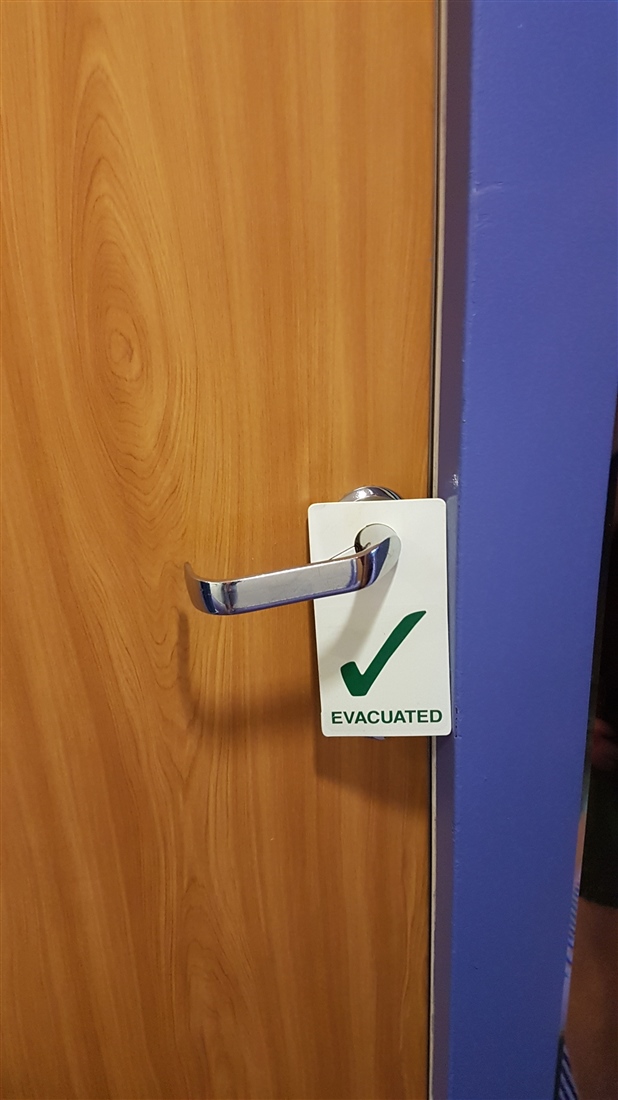
Controle safety drill
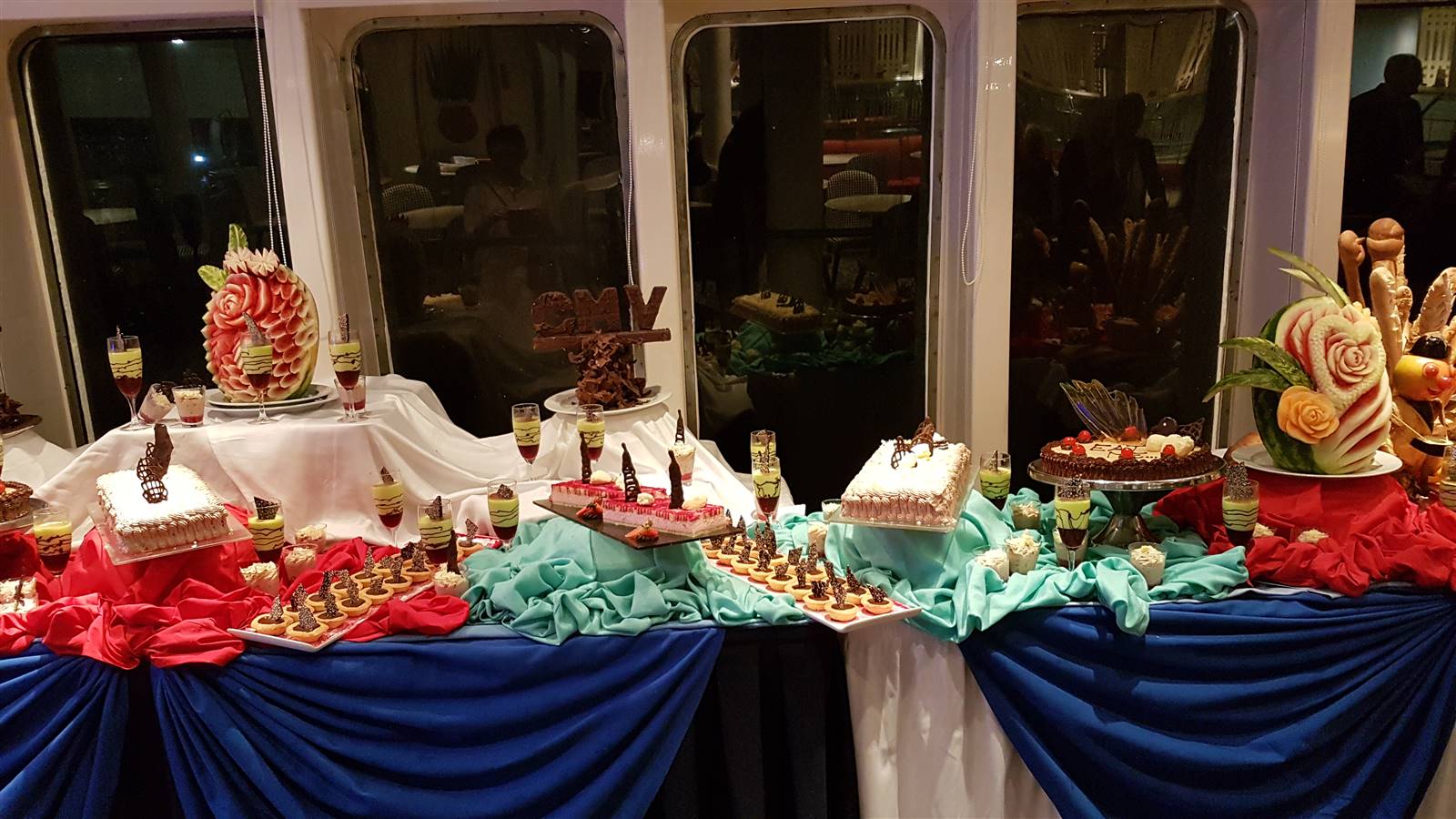
Buffet

Achterdek 's avonds - pooldeck at night

Marco Polo Show lounge

Demonstratie fruit snijden - fruit carving demonstration
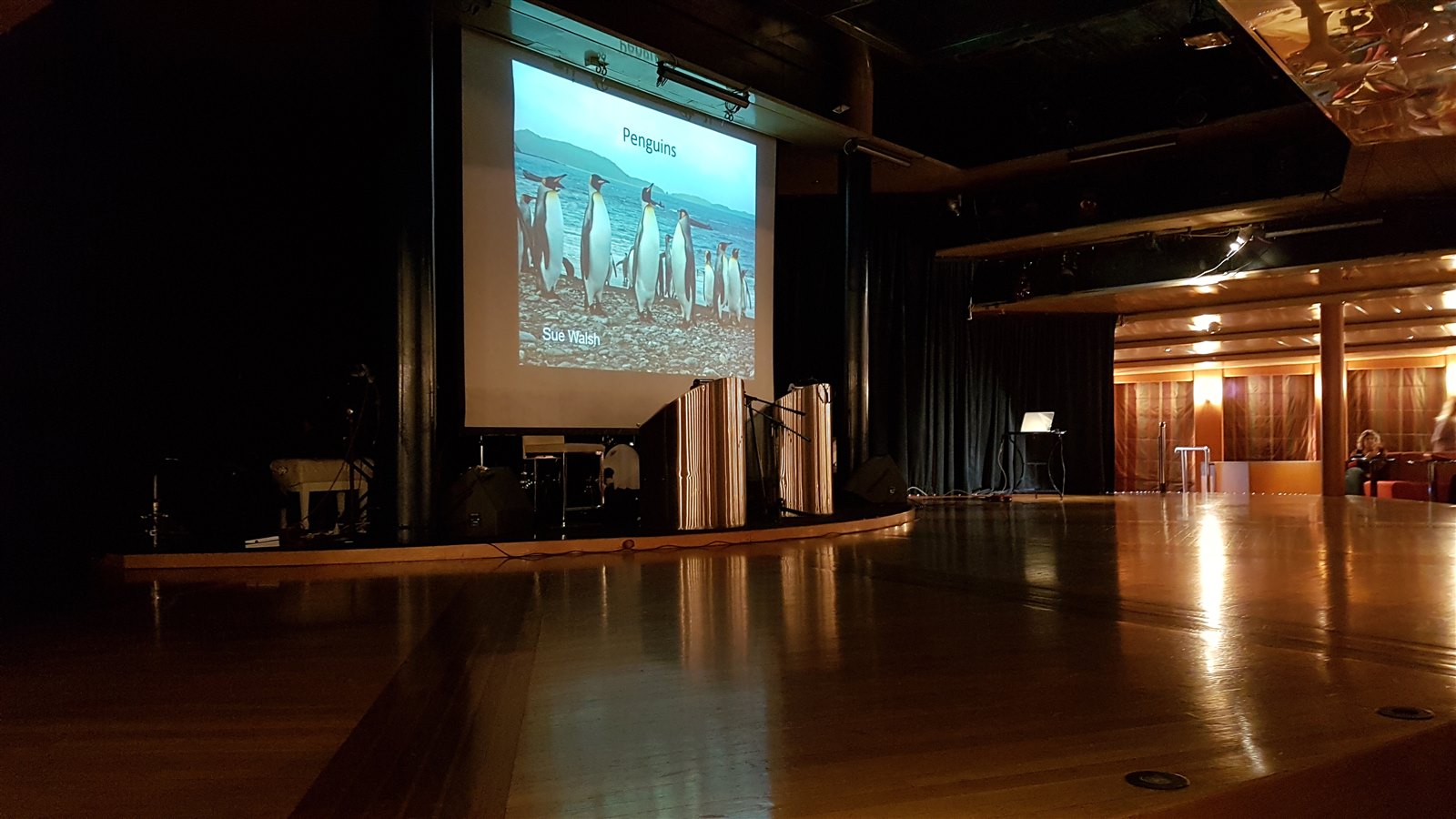
Wachten op de lezing - waiting for the lecture

Jan aan dek voor het shuffleboard - Jan in front of the shuffleboard