 Grand Circle South America Voyage 2019
Travel blog Jan & Mieke
Blog 24 januari: Brazilië deel 1 - Brazil part 1

Na Kaapverdië voeren we in 3½ dag naar Brazilië. De zee was heel kalm en de temperatuur werd steeds hoger omdat we de evenaar passeerden. We kunnen ons bijna niet voorstellen dat in Nederland de "schaatskoorts" weer is uitgebroken. We hebben gehoord dat onze vijver weer dichtgevroren is.
Tijdens de zeedagen vertoeven we zo veel mogelijk in ruimtes met airco. We zijn nog steeds druk met allerlei activiteiten zoals dansen, schilderen, lezingen bijwonen en lekker kletsen met allerlei mensen. We lezen, doen puzzels en spelletjes en ik heb het natuurlijk ook druk met het schrijven van mijn weblog.
Brazilië
Brazilië is qua oppervlakte en grootte van de
bevolking de 5e grootste natie van de wereld.
De Portugezen claimden het land in 1508. Het werd in 1822 een
onafhankelijke constitutionele monarchie met een keizer. Na een coup
werd het in 1889 een republiek.
Het land heeft in het verleden
verschillende dictaturen gekend, afgewisseld met democratische
regeringen.
De huidige president is democratisch gekozen, nadat de vorige
presidente was afgezet. Ze werd beschuldigd van corruptie. De
Brazilianen zelf menen dat corruptie één van de grootste problemen
van het land is.
De laatste jaren wordt het land steeds rechtser. Een van de
invloedrijkste bewegingen is een Evangelische religie. Ze strijden tegen
homo's, feministen, abortus en drugs.
De huidige president wil het Amazonegebied verder gaan exploiteren
ten koste van de daar wonende Indianen en van de natuur. Als dit
gebied geëxploiteerd wordt, zal dat een enorme invloed hebben op de
CO2-uitstoot en de opwarming van de aarde.
De president en zijn
volgelingen vinden, dat de tijd van de militaire dictatuur van
1964-1985 Brazilië's beste periode was.
Natal
Onze eerste haven in Brazilië was Natal. Het is
een grote stad met ongeveer 803.000 inwoners. Natal is gebouwd op
zand en het heeft geweldige stranden. We hebben echter het strand
niet bezocht, maar zijn naar één van de voorsteden gegaan. Daar
leeft De Capoeira- gemeenschap "Boa Vintade".
De Capoeira is een Braziliaanse martial art, die elementen van dansen,
acrobatiek en muziek combineert. Het is door West-Afrikaanse
afstammelingen in Brazilië ontwikkeld en is waarschijnlijk in de
16e eeuw begonnen. Het zijn vlugge en complexe bewegingen, trappen
en draaien. In Natal onderwijst een groep van dansers en meesters de
locale gemeenschap de danskunst. Het project is geïnitieerd door een
voormalig sociaal-werker, die de kunst ook beheerst. Het is bedoeld
om de kinderen van de arme wijken te behoeden voor drugs en bendes
en om ze te laten werken aan hun toekomst.
De kinderen waren erg goed en hadden veel plezier om ons hun kunnen te demonstreren. Ouders, familie en buurtgenoten kwamen ook een kijkje nemen en genoten er net zo veel van als wij. Er was extra politie in het straatje ingeschakeld om er voor te zorgen dat alles zonder problemen zou verlopen. De tocht naar de locatie van de dansers leidde ons door arme buurten.
De Marco Polo zou deze dag om 17.00 uur de haven verlaten, maar de Braziliaanse douane leverde de paspoorten veel te laat in. We vertrokken een half uur te laat richting Recife.
Recife
Recife is eveneens een hele grote stad met ongeveer
1.555.000 inwoners.
De stad is gesticht door Nederlandse kolonisten. De Nederlanders
veroverden het gebied in 1637 en prins Maurits van Nassau maakte een
ontwerp voor een stad met straten en bruggen en startte met de bouw. De Nederlanders werden
in 1654 verdreven, maar Recife bleef groeien.
Deze keer gingen we op eigen houtje de stad in. De cruiseterminal
was niet ver verwijderd van het oude centrum. We wandelden over een
boulevard langs de zee en er stond hier een fris windje. Om het
centrum te bereiken moesten we eerst over een brug, omdat het oude
centrum met zowel gerestaureerde als verwaarloosde gebouwen, op een
eiland ligt.
In het toeristisch centrum was veel politie op straat. We bekeken wat
oude gebouwen en vervolgden onze route over een
tweede brug. Nu waren we in een heel ander gedeelte beland. Het was
hier niet zo toeristisch meer, er was geen politie en er waren veel
winkels en markten.
Plotseling hoorden we een flink lawaai. Er kwam een
demonstratietocht aan met ongeveer 50 mensen. Ze schreeuwden leuzen
en probeerden het drukke verkeer tegen te houden. Daar waren de
automobilisten niet van gediend en ze toeterden om het hardst. We
konden helaas niet goed op de spandoeken lezen waar de demonstratie
tegen was.
We vervolgden onze weg en na een poosje keerden we terug. Het stonk
namelijk nogal naar urine en onder de woningen werd je nat van het
water dat uit de airco's drupte. We namen nu de Prins Maurits van
Nassau-brug en vonden hem erg mooi.
Het was 32° C en we besloten een lekker glaasje koel Braziliaans
bier te gaan drinken. Het smaakte ons goed. Jan kocht nog een mooie
hanger met een gitaar voor me en vervolgens gingen we terug naar het
schip om van een late lunch te genieten.
's Avonds vertrokken we op tijd naar Rio, dat twee dagen varen is.

After Cape Verde we sailed to Brazil in 3½ days. The sea was very
calm, the temperature got higher and higher because we were near the
Equator. It is hard to imagine that the Dutch people in the
Netherlands have the 'skate fever' and that the open waters have been
frozen. So is our pond in Bussum!
On sea days we prefer to be in air-conditioned places to perform our
activities, such as dancing, painting, attending interesting
lectures and chatting with nice people. We also read, do crossword
puzzles and of course I have to work at my blogs.
Brazil
Brazil is the world's 5th largest country by area and the 5th most
by population.
The Portuguese claimed the land in 1508. In 1822 it became
an independent constitutional monarchy, the Empire of Brazil. After
a coup it became a republic in 1889.
The land has known more than one military coup. The present
government is democratically chosen, after the impeachment of the former
president, she was accused of corruption. The Brazilian people mean
that corruption is one of the major problems of Brazil.
The last few years the country has become more and more
extreme right. An
evangelistic religion has a lot of influence. They are against gay
people, feminism, abortion and drugs.
The present president wants to economically exploit the Amazon area
at the cost of the inhabitants, the native Indians and of nature.
Cultivating this region has an immense effect on the global warming
of the earth.
The president and his followers argue that the
best time for Brazil, was during the dictatorial regime from
1964-1985.
Natal
Our first port of call in Brazil was Natal. It is a large city of
approximately 803,000 inhabitants. Natal is built on sand and it has
great beaches. However, we did not visit the beach, but one of the
suburbs. There the Capoeira community 'Boa Vintade' live.
The Capoeira is a Brazilian martial art that combines elements of dance,
acrobatics and music. It was developed in Brazil mainly by West African
descendents with native Brazilian influences and is most likely that it started in the 16th century. There are quick and complex moves, kicks and
spins.
A group of Capoeira dancers and masters teach the local
community of Natal the art of the dance. This project is initiated by a
social worker, also a Capoeira dancer, who intends to keep the
children from the drugs and the gangs and stimulates them to work at
their future.
The children were very good and had a lot of fun in showing us their
arts. Parents, family and friends of the children attended too and they
enjoyed it as well as the tourists. There was extra police to watch whether everything was going well. The trip from the Marco Polo to the Capoeira
group led us through poor neighbourhoods.
The Marco Polo should leave at 17.00 hrs, but the Brazilian customs did not
bring back our passports in time, so we left half an hour
later.
Recife
Recife is also a very large city, it has approximately 1,555,000 inhabitants. The city was founded by Dutch colonists. The Dutch invaded the area in 1637 and Prince Maurice of Nassau conducted an urbanization plan, defined a layout for the streets and for bridges and began to build the city. The Dutch were expelled in 1654, but Recife kept growing.
This time we went to the city on our own. The cruise terminal
was not far away from the old centre.
We walked on a large
boulevard with a view at the sea and there was a refreshing
breeze. To reach the centre, we had to cross a bridge,
because this old part with restored and neglected old buildings, is
situated on an island. There were many policemen on the streets of
the old touristic centre.
We admired the old buildings and continued our way by crossing a
second bridge and suddenly we were in a total different area. It was
not touristic here and there were a lot of shops and market places.
We heard a terrible noise and saw a demonstration of about 50
people. They obstructed the traffic and the drivers of the cars were
angry and used their horns.
We could not discover where the people were marching against.
We continued our way, but after a while we decided to go back. The
streets smelled of urine and we got wet of the dripping water from
the air conditionings, which were placed against the walls of the
buildings.
We went back over the Prince Maurice of Nassau Bridge and thought it
was a beautiful bridge.
It was about 32° C and we decided to drink a glass of cold
Brazilian beer. It tasted not bad. Jan bought a wonderful necklace with
a guitar for me. After that we went to the ship to enjoy a
late lunch.
The Marco Polo left in time for two days sailing to Rio de Janeiro.
Foto's - Pictures
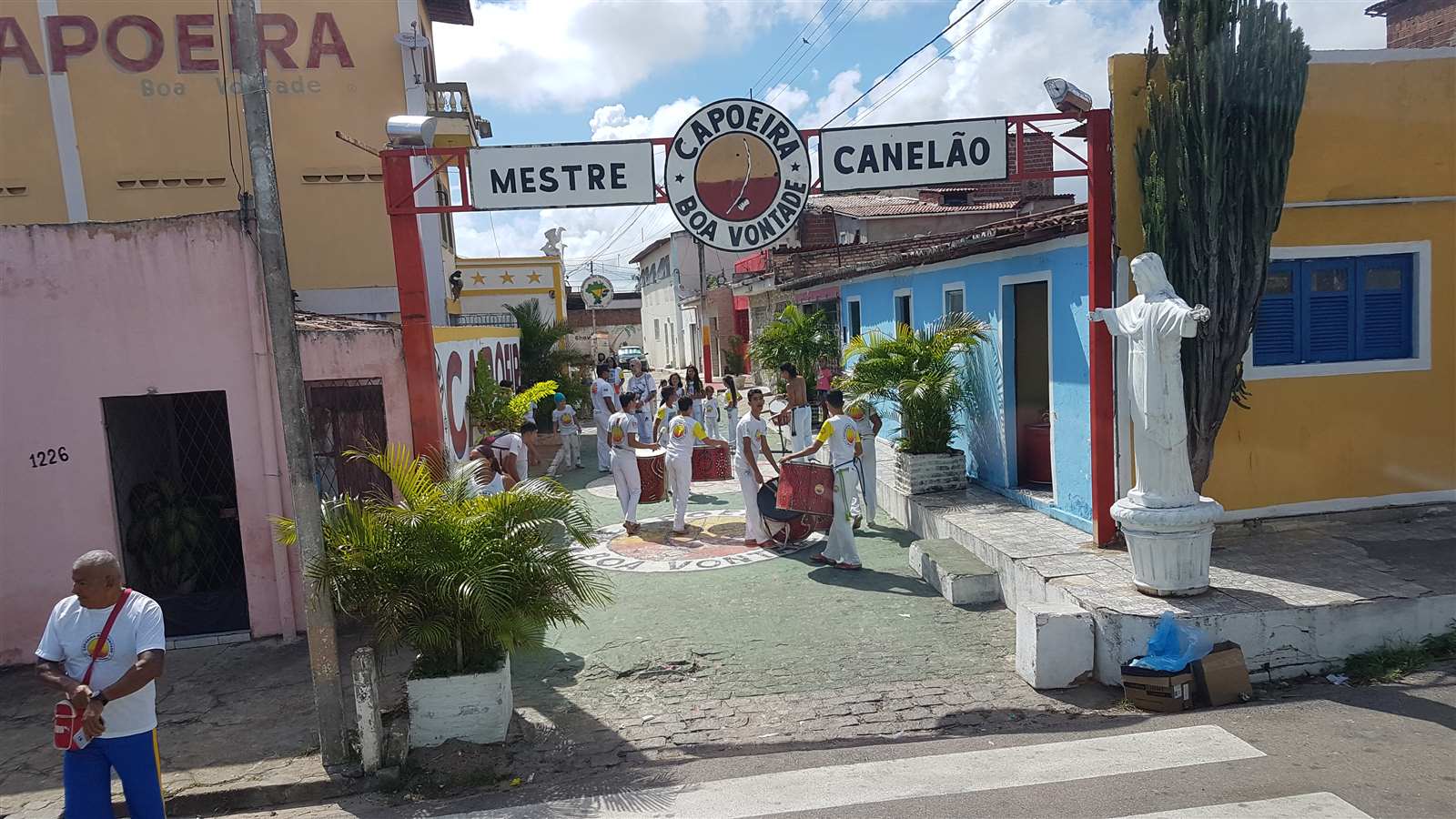
Natal, Boa Vintade: toegang - entrance

Natal: demonstratie Capoeira dans - demonstration Capoeira dance

Natal: demonstratie Capoeira dans - demonstration Capoeira dance

Natal: onderweg naar de Capoeira gemeenschap - on the way to the Capoeira community

Natal: uitzicht op de stad en de Newton Navarro brug - view of the city and the Newton Navarro bridge

Recife: cruise terminal
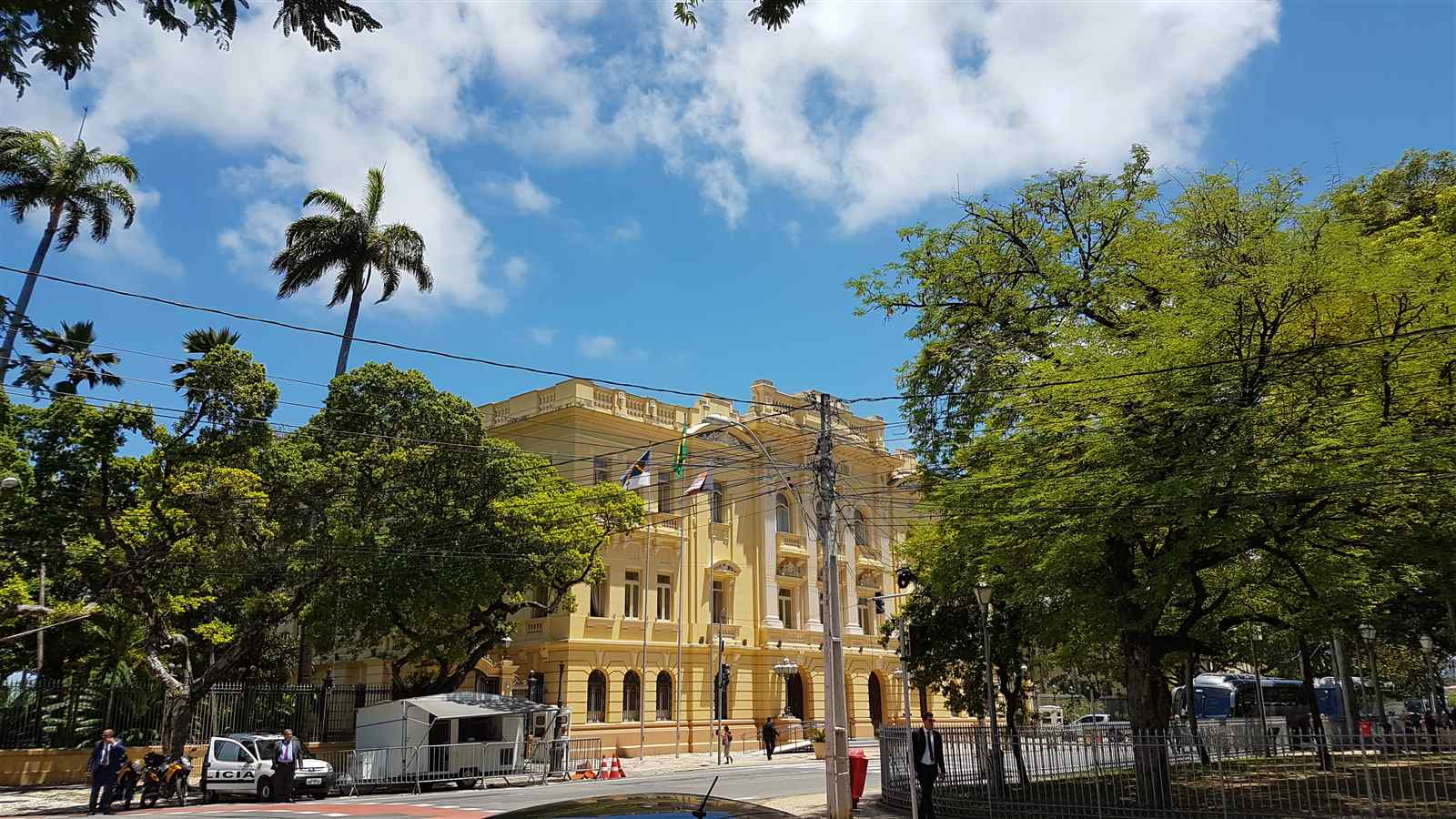
Recife: oude stad - old town
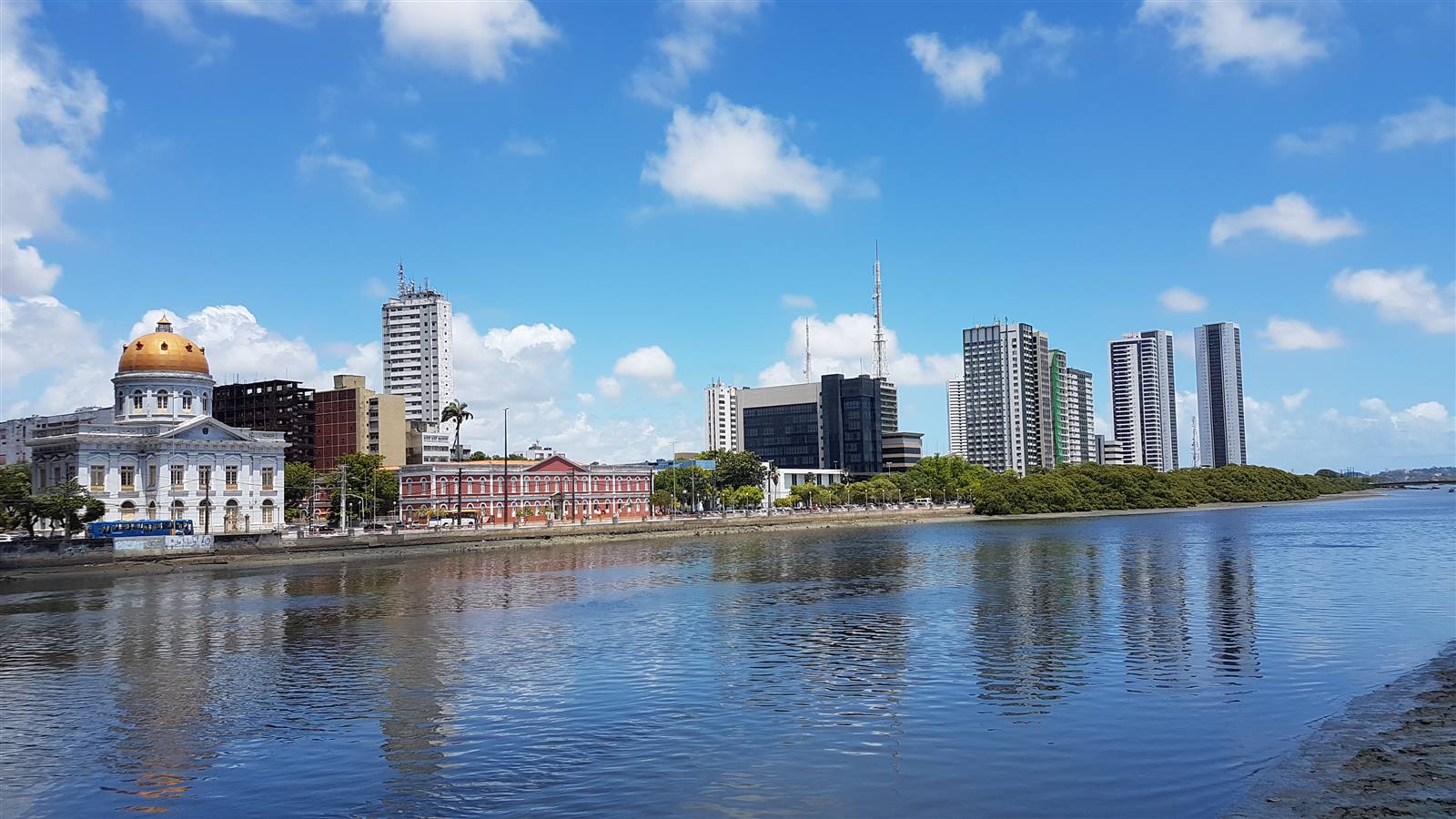
Recife: oud en nieuw - old and new

Recife: demonstratie - demonstration

Recife: Prins Maurits van Nassau brug - Prince Maurice of Nassau bridge